

Thank you! Your submission has been received!
Oops! Something went wrong while submitting the form.
April 1, 2026
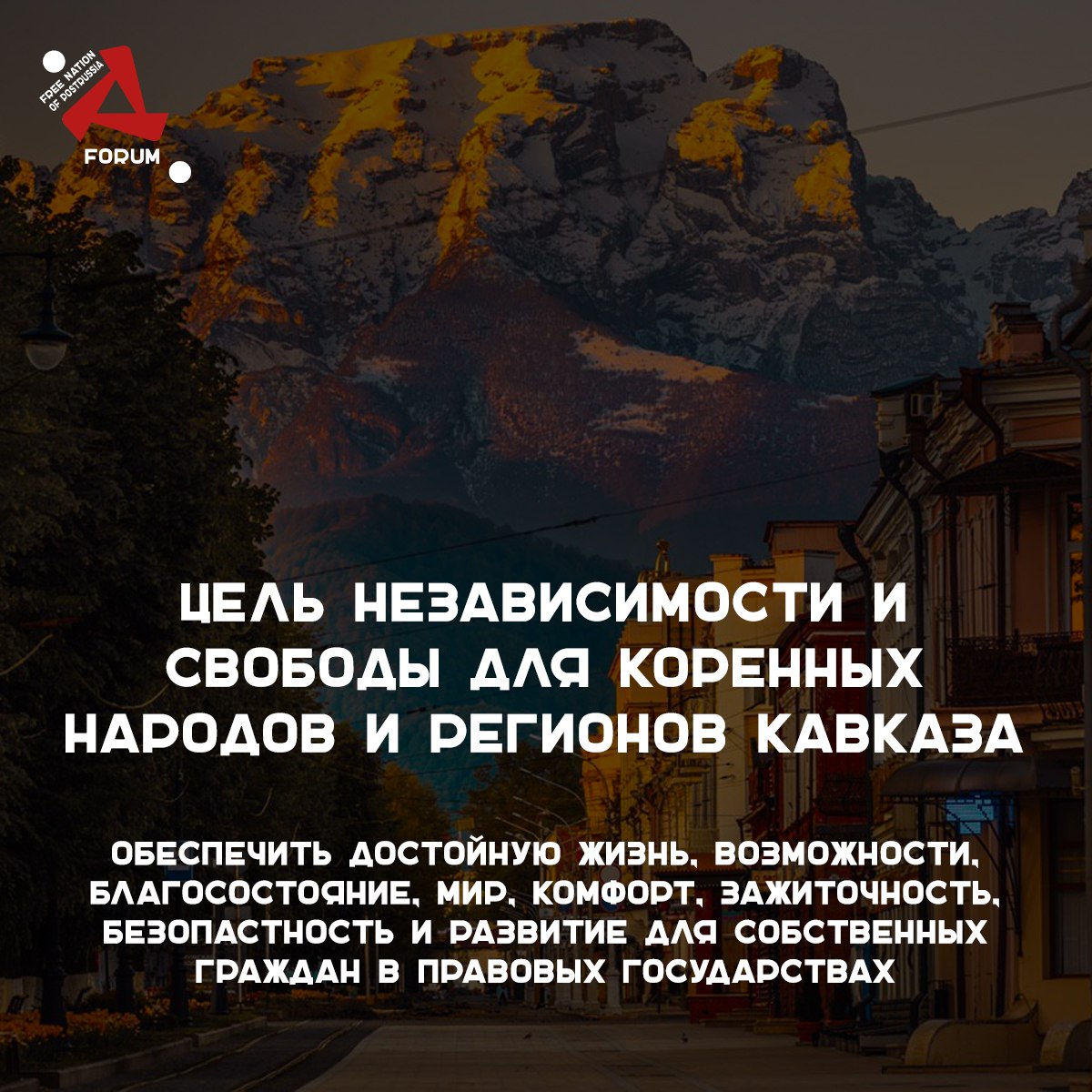
If, in 2026, you are still trying to find a kernel of rationality in Russian"federalism", you are either a hopeless optimist or you haven’t looked at the federal ledger in ages. In the Kremlin’s "Bolshoi Theater", Dagestan is traditionally cast as the colonial understudy:strategically vital, chronically underfunded, and trapped in a script written by Moscow playwrights.
2026was the year the Russian "gas station" finally started sputtering, and the imperial glue began to crack under the weight of sanctions and a war that has dragged on too long. At this point, the conversation about Dagestan stops being an academic exercise and becomes the cold, hard arithmetic of decolonization. While Moscow’s appointees get medals for "loyalty", are public with the potential to be a regional economic hub is kept on a starvation diet of federal handouts that look more and more like prison rations.
But when the "Center" stops paying – and that is no longer a question of"if", but "when" – Dagestan finds itself in a position where its geography, resources, and human capital start working for themselves, rather than for a foreign metropole.
The war in Ukraine has been devouring resources for four years straight, and theKremlin’s fiscal fortress looks less like a bastion and more like Swiss cheese.By January 2026, the budget is hitting record lows: oil revenues have been slashed nearly in half, Urals crude is teetering around $40 a barrel, and the deficit has bloated to 8–10 trillion rubles. For regions like Dagestan, this means one thing: the "lifeline" of subsidies is turning into an IOU from a bankrupt relative.
However, unlike Tatarstan or Bashkortostan, where talk of independence has long been whispered (however quietly), Dagestan’s path to sovereignty remains a thought experiment. The Moscow model – hyper-centralized, extractive, and paranoid – has made sure of that.
But let’s imagine Dagestan as the undervalued gateway to Eurasia: Caspian ports buzzing with traffic, railways winding through the mountains to Azerbaijan andGeorgia, and energy routes connecting the region to a "free" Iran andSouth Asia. The International North–South Transport Corridor could turn it in to a key logistics hub, funneling goods between India and Europe while bypassing the Suez Canal.
Their only is that, for now, this geography feeds Moscow’s ego, not Dagestan’s wallet. The ports, roads, and power grids are under "federal control"– mostly in the grip of state-owned giants. Dagestan remains a transit zone with zero say in the matter: yielding minimal rent, but maximum environment a land social costs.
Politically, the republic remains Moscow’s model prisoner: there are no direct elections for the head of the republic, the rotation of elites is orchestrated entirely from the Kremlin, and the security apparatus strangles any hint of dissent. Any conversation about sovereignty is instantly packaged into the familiar narrative of "radicalism" and "ethnic chaos". The attacks of 2024–2025 only reinforced this logic, making decentralization synonymous with the apocalypse.
The weakening of the Russian economy – driven partly by the pivot of India and other buyers away from Russian markets – theoretically could have opened a window of opportunity. But instead of economic conversion, Moscow is doubling down on the militarization of the Caspian. The expansion of the CaspianFlotilla base in Kaspiysk is turning the sea into a rear-guard the after of military operations rather than a marketplace, scaring off both investors and tourists.
Dagestan’s economic paradox is almost comical. The region is rich in oil, gas, hydropower, building materials, and has massive agricultural and tourism potential – yet it chronically "begs for federal handouts". There are more than enough resources for self-sufficient development, but the revenue is hoovered up by the "Center" and then "redistributed" through murky schemes designed to buy elite loyalty, not to fuel economic growth.
As"Putinomics" falls apart – with oil tax revenues plummeting, export duties shrinking, and the ruble price of a barrel drifting further away from planned targets – the Center’s ability to "subsidize" the regions is evaporating. For Dagestan, this signals an era of hard austerity. Here, bankruptcy isn't a metaphor; it’s just bookkeeping.
As the "Center's financial capacity" shrinks, control inevitably loosens. War casualties, which are higher here than the national average, are accumulating into deep social grievance; economic pressure is birthing a form of quiet sabotage. There is no mass independence movement yet – repression and fragmentation have done their job. However, in the so-called "RussianFederation", where the federal adhesive is dissolving, de facto independence might emerge not from slogans, but from the bargaining table.
The main stumbling block is diversity. Over 30 ethnic groups, languages, and clansrepre sent both a cultural wealth and a nightmare for state-building. The absence of a dominant "titular" nation deprives the independence project of a simple, unifying narrative. Moscow skill fully uses this as an argument for eternal supervision. "Divide and conquer" – it’s a classic of the genre.
Even in a scenario where Russia collapses, Dagestan won't become free automatically.It is surrounded by neighbors with their own interests, lacks an obvious external "anchor", and for the West, it remains more of a Caspian risk than a potential partner. Sovereignty here isn't a gift; it is a complex and dangerous process.
But if you think talk of turning Makhachkala into a "Caspian Singapore"is just another propaganda reel shot on budget money and forgotten the next morning, you are underestimating the sheer power of sound accounting.
By2026, as Moscow’s imperial ambitions finally crystallize into economic deadweight, a "roadmap" for Dagestan stops being a pipe dream. It reads like a manual for unlocking assets currently frozen within the Russian"management model".
In2026, the question of Dagestan’s future is no longer a dream or a manifesto. It is an asset inventory amidst a waning metropole.
And this inventory is just beginning.
Stage1: Financial Detox and Signatory Power
The first order of business: stop feeding the middlemen. Today, Dagestan isn’t a region; it’s an offshore colony for Moscow handlers.
100%of oil and gas tax revenue stays in the republic. That’s not"separatism"; that’s just basic logic. Right now, the money takes a bizarre route: Makhachkala → Moscow → shrinkage → return as"subsidies" attached to political loyalty strings. Any CFO would call that an inefficient scheme with a built-in corruption premium.
Further more, no investor from Iran, the UAE, or India will step into a courtroom where the verdict depends on a phone call from the Kremlin. That’s why Makhachkala’s priority number one is to create an independent arbitration jurisdiction with international judges and English Common Law – exactly like Dubai and the AIFC in Astana. The Caspian isn’t a periphery; it’s a crossroads of interests, and it needs its own legal language.
Next:a zero-tax rate on IT exports. Given the massive youth demographic, this beats any government jobs program. Dagestan stops exporting oil and starts exporting brains – no middlemen, no sanctions filters.
Stage2: The Logistics Pivot
Moscow’s fatal geopolitical error was turning the Caspian from a sea of trade into a military bathtub. Dagestan has no use for that logic.
The plan calls for converting the naval infrastructure in Kaspiysk into container terminals and ship repair yards. Logistics instead of missile boats. Instead of a hard border, a hub for the "North–South" corridor connecting India,Iran, the Caucasus, and Europe. In a sanctioned world, it’s not the fortresses that win – it’s the train stations.
Nextstep: creating agro-export hubs. Certification under Halal and GlobalG.A.P.standards allows Dagestan irice and lamb to fly direct to Dubai and Doha, rather than getting stuck in the "sanitary wars" Moscow uses as a tool of internal control.
Stage3: The Energy Hedge and the "Octagon Economy"
By this point, Dagestan must kick the oil habit – before the needle finally rusts over.
Offshore wind, modernizing the hydroelectric cascade, solar farms on the coast. Dagestan becomes an exporter of "green" power to its neighbors, not an appendage of the Russian hydrocarbon pipe.
Further, we need to stop just being proud of MMA champions and start capitalizing on the brand. A global center for sports medicine, rehabilitation, and science – amulti-billion dollar market where Dagestan already holds the reputational high ground.
And finally, Makhachkala 2035: not a concrete jungle of chaos, but a city with promenades, a dense urban fabric, and a preserved cultural code. Tourism contributes up to 15% of GDP thanks to a unique combo: mountains, sea, and thirty different nations – minus the imperial standardization.
InSingapore, there was nothing but water and people. In Dagestan, there is water, energy, resources, and a population trained to survive where any other business would have folded long ago.
The main barrier for Western VCs isn't Islam, isn't the mountains, and isn't the"difficult region" tag. It is the fear of arbitrary confiscation. As soon as Makhachkala adopts English Common Law and guarantees that private property won’t be handed over to the nephew of some deputy minister, capital will flow in as fast as a mountain river after a storm.
Investors don’t invest in "good people". They invest where they can buy low and sell high.
Today, Dagestan is Apple circa 1997: it looks like a disaster, but with a strategy pivot, what lies ahead is a market cap that Moscow can only dream about in its Audit Chamber reports.


